A framework built around the child,
not just the syllabus.

A good education is about more than what a child scores β€” it is about what they understand, how they think, and who they are becoming. Our academic framework is built around all three.

PROGRAMMES AT RBIS

Four stages, one continuous journey.

Pre-Primary
01
FOUNDATIONAL STAGEAges 3–6

Pre-Primary

Where learning begins β€” with play, curiosity, and care.

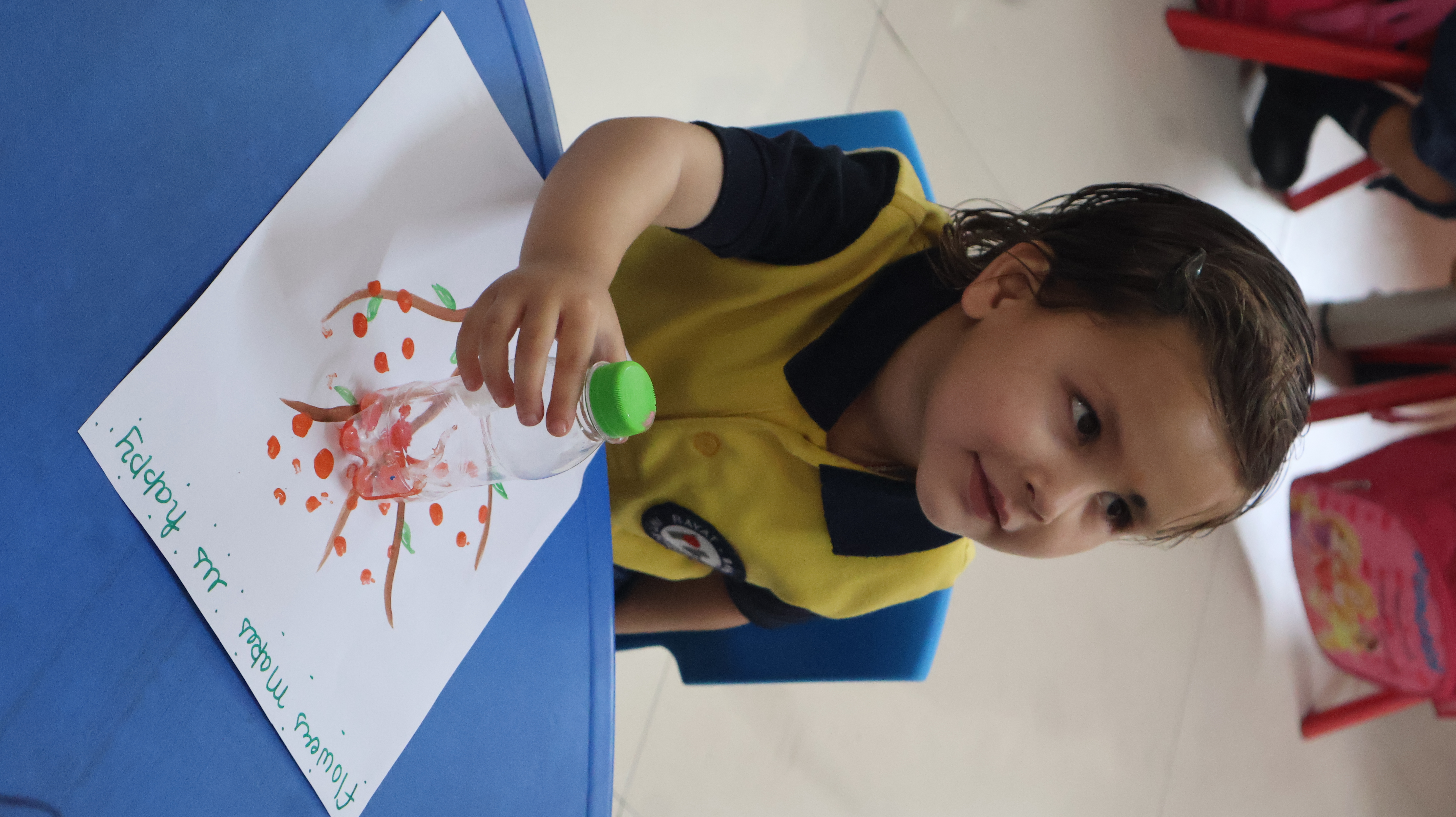
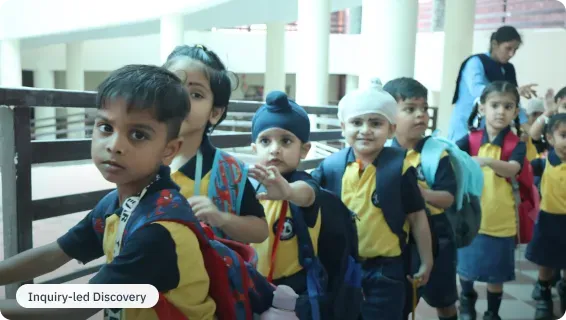
Our Pre-Primary programme follows the National Curriculum Framework for the Foundational Stage (NCF-FS 2022), as adopted by CBSE. At this stage, play is not a break from learning β€” it is learning.

Nursery: Social play, early language, number awareness, motor skills, and emotional confidence β€” all through stories, music, movement, and guided exploration.
LKG: Letter recognition, phonics awareness, numbers up to 50, environmental awareness, and creative expression through art, craft, and performance.
UKG: Reading readiness, independent writing, numbers up to 100, basic addition and subtraction, life skills, and structured school routines β€” preparing children confidently for Class 1.
How progress is measured

In line with NCF-FS 2022, there are no written examinations at this stage. Progress is tracked through continuous observation and portfolio documentation. Parents receive a Holistic Progress Card covering all five developmental domains β€” giving a complete picture of their child’s growth, not just a score.

Hover to explore more
Primary School
02
AGES 6–11Classes 1 – 5

Primary School

Building strong foundations β€” in learning and in life.

The Primary years follow the CBSE curriculum under the National Curriculum Framework for School Education (NCF-SE). These are the years when children move from learning through play to learning with purpose β€” and we make sure that transition is gradual, joyful, and well supported.

What children study
  • English & Hindi:Reading, writing, grammar, and spoken communication β€” taught through stories, discussions, and creative projects. Both languages are given equal importance from Class 1.
  • Mathematics:From number sense and place value to fractions, decimals, and basic geometry β€” concepts are introduced using concrete materials and real-life contexts before moving to abstract application.
  • EVS β†’ Science & Social Science:Classes 1 and 2 explore the world through Environmental Studies. From Class 3, Science and Social Science are taught as separate subjects in line with CBSE guidelines β€” through observation, projects, and discussion.
  • Computer Science, Arts, Music & Physical Education:Co-scholastic subjects are a structured part of every child’s week β€” assessed and reported alongside academics, as CBSE requires.
How progress is measured

Children are assessed through Formative Assessments across the year and Summative Assessments each term. Written examinations are introduced in a graded manner from Class 3. Progress reports covering both academic and co-scholastic development are shared with parents each term.

Hover to explore more
Middle School
03
AGES 11–14Classes 6 – 8

Middle School

Where curiosity becomes capability.

The Middle School years introduce subject specialisation for the first time β€” and with it, a new kind of intellectual challenge. At RBIS, we follow the CBSE curriculum for Classes 6 to 8, with a strong emphasis on conceptual understanding, independent thinking, and building the academic habits that will carry students through the senior years.

What students study
  • English & Hindi:Literary analysis, essay writing, grammar in depth, and confident spoken expression β€” both languages are developed at a higher level of complexity and purpose.
  • Mathematics:Integers, algebra, ratio and proportion, geometry, mensuration, and data handling β€” taught with a focus on mathematical reasoning, not just formula application.
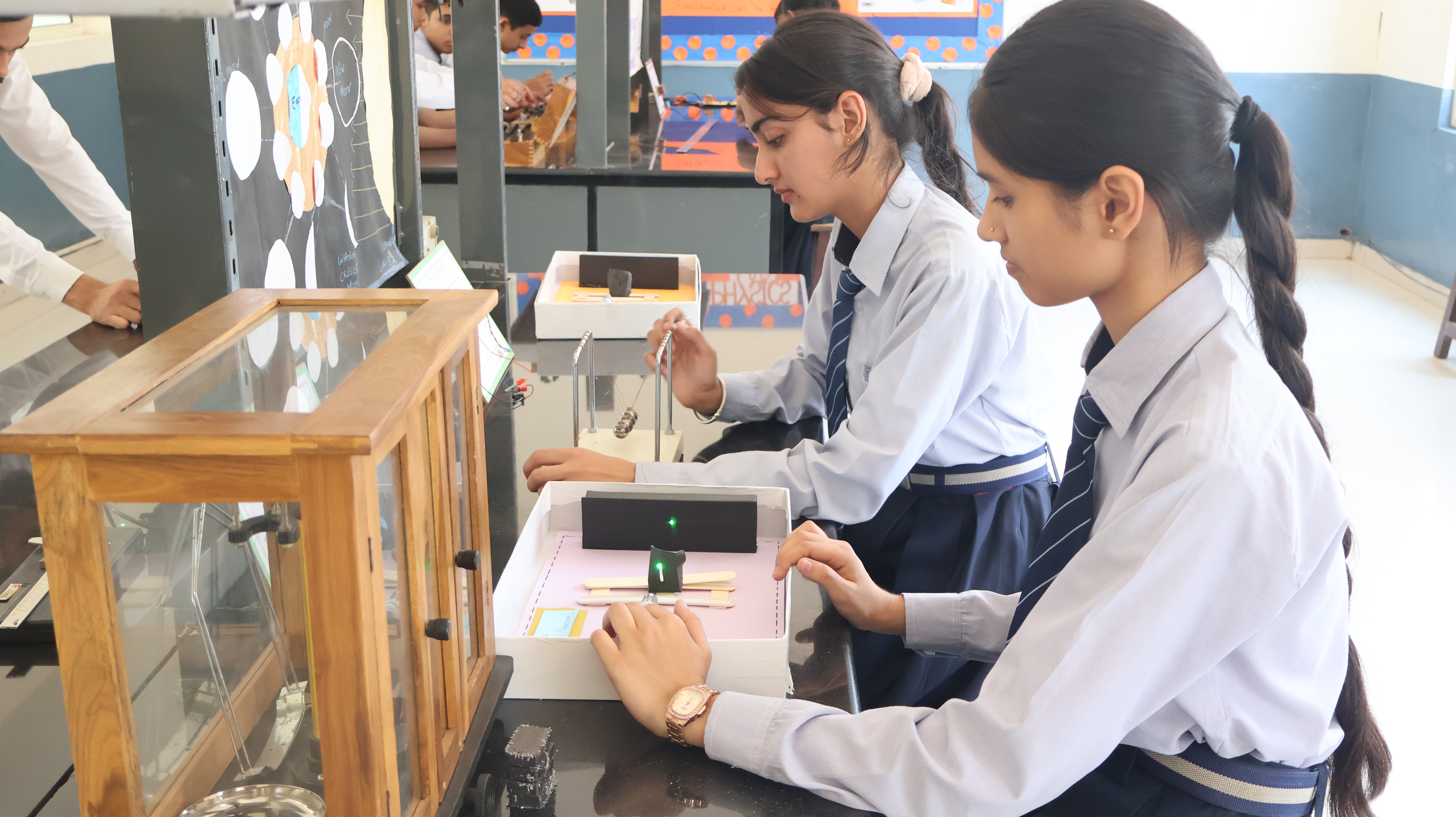
  • Science:Physics, Chemistry, and Biology taught as one integrated subject β€” with regular laboratory sessions, science projects, and real-world connections built into every unit.
  • Social Science:History, Geography, Political Science, and Economics as separate disciplines β€” explored through case studies, maps, current events, and primary source material.
  • Punjabi & Computer Science:Punjabi as the third language per CBSE’s three-language policy, alongside a structured Computer Science curriculum covering computational thinking and digital literacy.
  • Arts, Music, Physical Education & Work Education:Co-scholastic areas are assessed and included in the student’s report card as per CBSE norms β€” not treated as optional additions to the school day.
How progress is measured

Students are assessed through Periodic Tests, Half-Yearly Examinations, and Annual Examinations. Subject enrichment activities, project work, and portfolios also form part of the assessment structure. Co-scholastic skills are assessed and reported separately each term.

Hover to explore more
Secondary & Senior Secondary
04
AGES 14–18Classes 9 – 12

Secondary & Senior Secondary

Rigorous preparation. Genuine support. Clear pathways forward.

The Senior Secondary years are where academic focus sharpens and future pathways begin to take shape. We follow the CBSE curriculum through to the All India Secondary School Examination (Class 10) and the All India Senior School Certificate Examination (Class 12) β€” with a strong emphasis on board preparation, deep subject understanding, and thoughtful guidance for what comes next.

What students study
  • Classes 9 & 10:Five core subjects as per CBSE β€” English, Mathematics, Science, Social Science, and Hindi β€” alongside one optional subject from Computer Science, Artificial Intelligence, Information Technology, or Physical Education. Internal Assessment (20 marks) and Board Examination (80 marks) structure applies from Class 9 itself.
  • Science (Classes 11 & 12):PCM (Physics, Chemistry, Mathematics) for engineering, technology, and architecture. PCB (Physics, Chemistry, Biology) for medicine, pharmacy, and life sciences. PCMB for students who wish to keep both options open.
  • Commerce (Classes 11 & 12):Accountancy, Business Studies, Economics, and Mathematics or Informatics Practices β€” for students interested in finance, business, and management.
  • Humanities (Classes 11 & 12):History, Geography, Political Science, Economics, Psychology, and Sociology in various combinations β€” for law, journalism, design, social sciences, and public policy.
How progress is measured

As per CBSE norms, Class 12 board examinations carry significant weight for university admissions. Students are prepared through Periodic Tests, Pre-Board Examinations, and individual doubt-clearing sessions. Internal Assessment (20%) is earned through practicals, projects, and periodic tests conducted across the year.

A note for parents

Stream selection in Class 11 is one of the most important academic decisions a child will make. At RBIS, we offer individual counselling sessions with students and parents before this decision β€” ensuring every child chooses a pathway aligned with their genuine strengths and interests. Our Career Guidance Cell also supports students from Class 10 onwards for JEE, NEET, CUET, and university applications.

Hover to explore more
OUR APPROACH

The RBIS Learning
Blueprint.

Every year at RBIS begins with a simple planning question: what should this child be able to do, think, and understand by the time this year ends? That question sits at the centre of four interlinked frameworks β€” how we teach, how students learn, how we assess progress, and how technology supports all three.

β€” RBIS Academic Council
01 β€” Teaching

How Our Teachers Teach

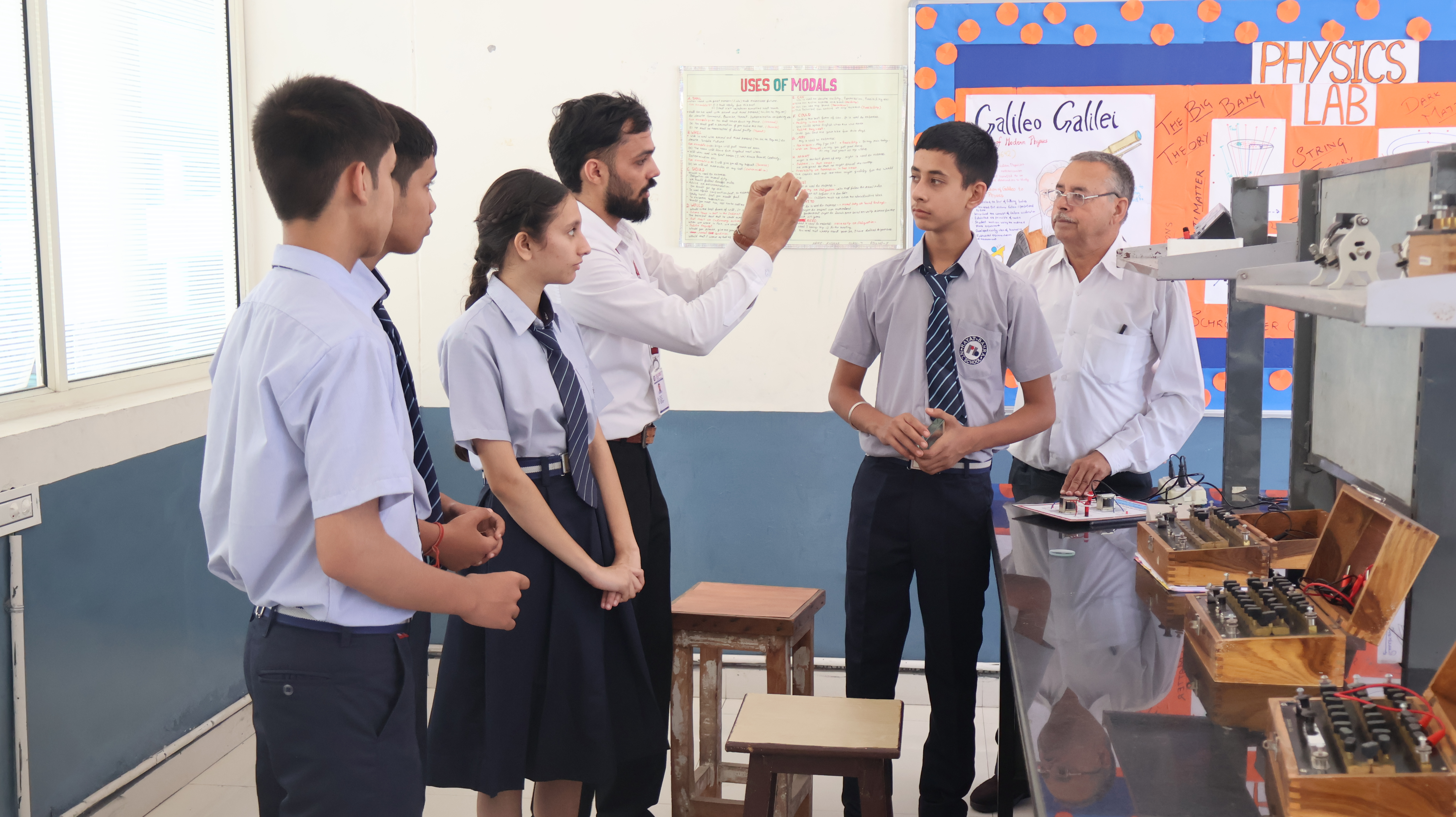
Every lesson follows a structured, inquiry-first model: a question opens the lesson, not a definition, and students are guided toward understanding rather than handed the answer outright. Our faculty are trained in lesson design and differentiated instruction, so a lesson adapts to how a class actually learns β€” not just what the syllabus says to cover that week.

02 β€” Learning

How Our Students Learn

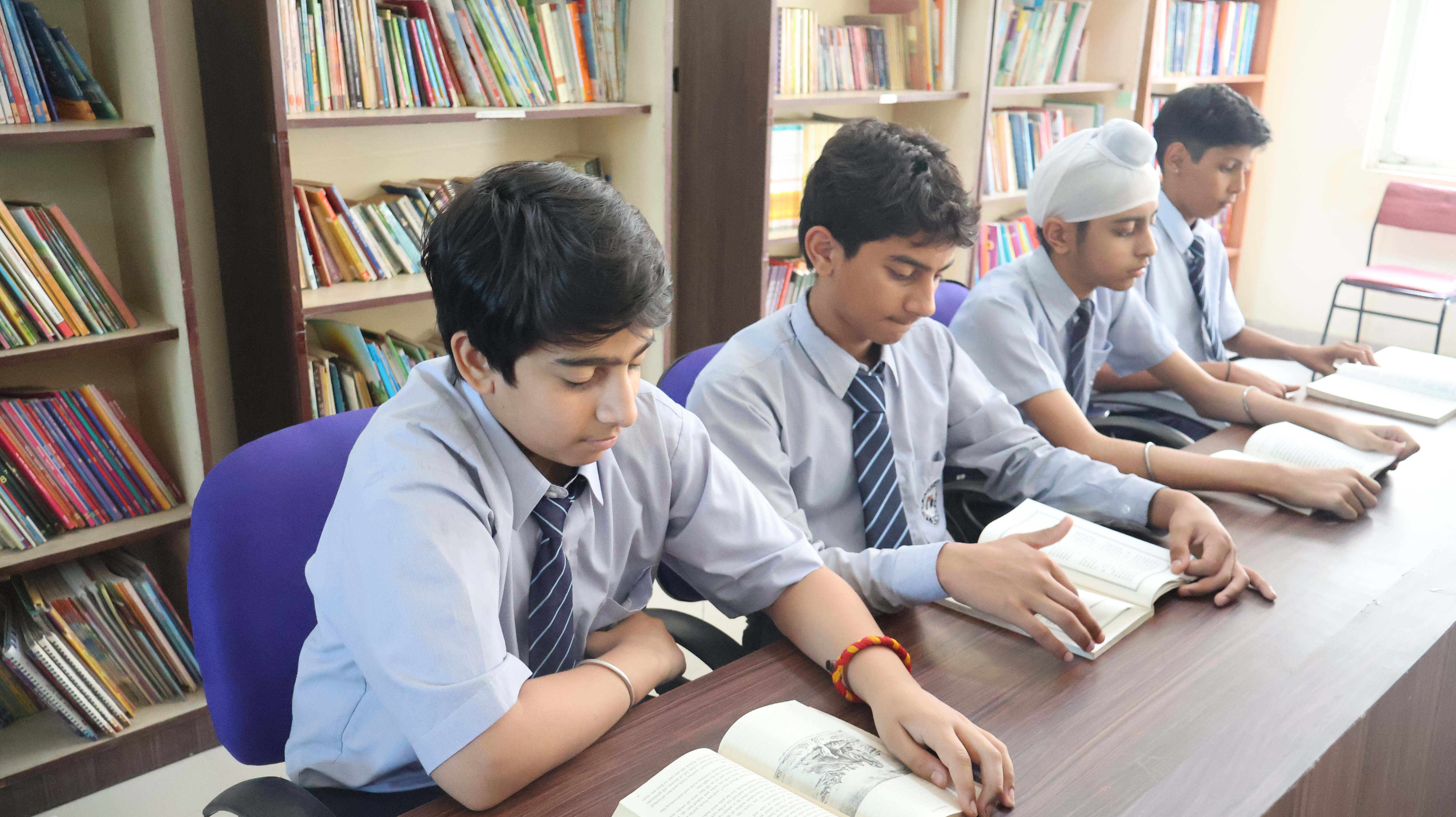
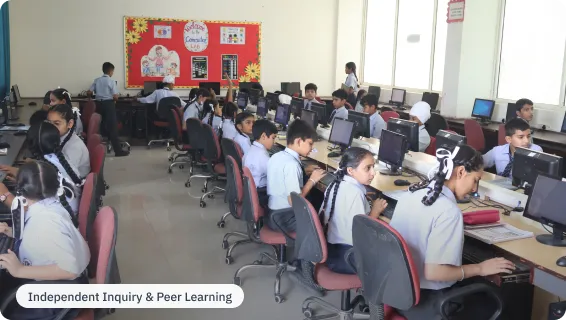
Classrooms are built for student voice, not teacher monologue. Group work, peer discussion, and self-directed tasks have a deliberate place on the weekly timetable, not just as occasional variety. Every new unit opens with a simple concept map, so students can see how an idea connects to what they already know before they're asked to apply it.

03 β€” Assessment

How We Measure Progress

At RBIS, assessment is continuous. As per CBSE guidelines, students are assessed through Periodic Tests and term-end examinations across the year. We also track progress through class participation, projects, and subject enrichment activities. Co-scholastic areas β€” including health and physical education, discipline, and values β€” are assessed and reported separately. Parents receive a detailed report card each term covering both academic and co-scholastic development.

04 β€” Technology

Technology at RBIS

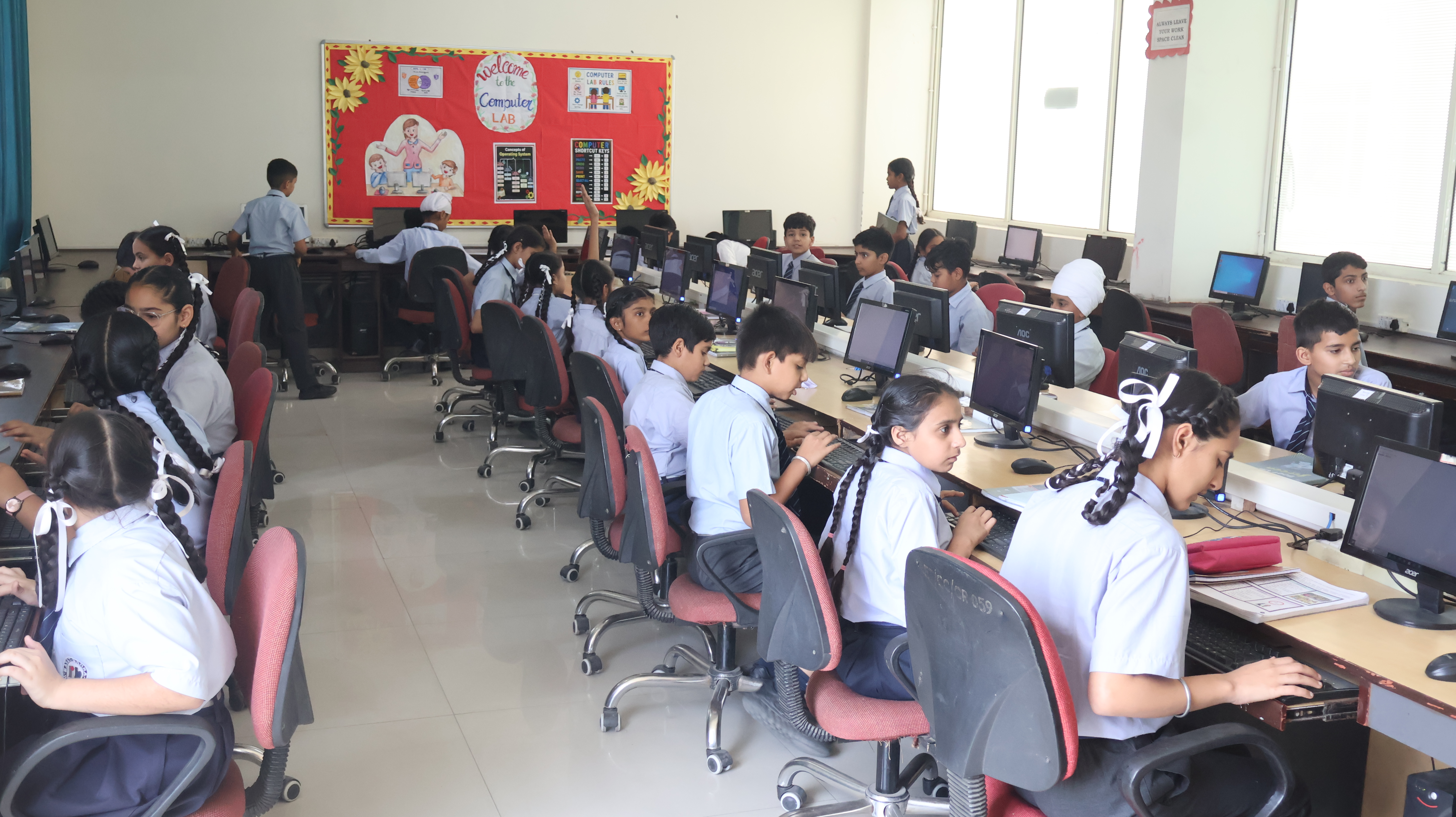
At RBIS, technology is taught as a structured subject β€” not just used as a classroom tool. Our smart classrooms support interactive, multimedia learning across all subjects, and parents have access to a digital portal for real-time updates on attendance, homework, and progress.

BEYOND THE SYLLABUS

Learning that reaches past
the textbook.

Academics at RBIS is never just about examinations. Every subject is taught with room for questions, curiosity, and real-world connection β€” because we're not just preparing students for their next test, we're preparing them for their next twenty years.

Curious to know more?

Let's talk about the right stage for your child.

Our academic counsellors are happy to walk you through the curriculum, the Learning Blueprint, and what a typical week actually looks like.